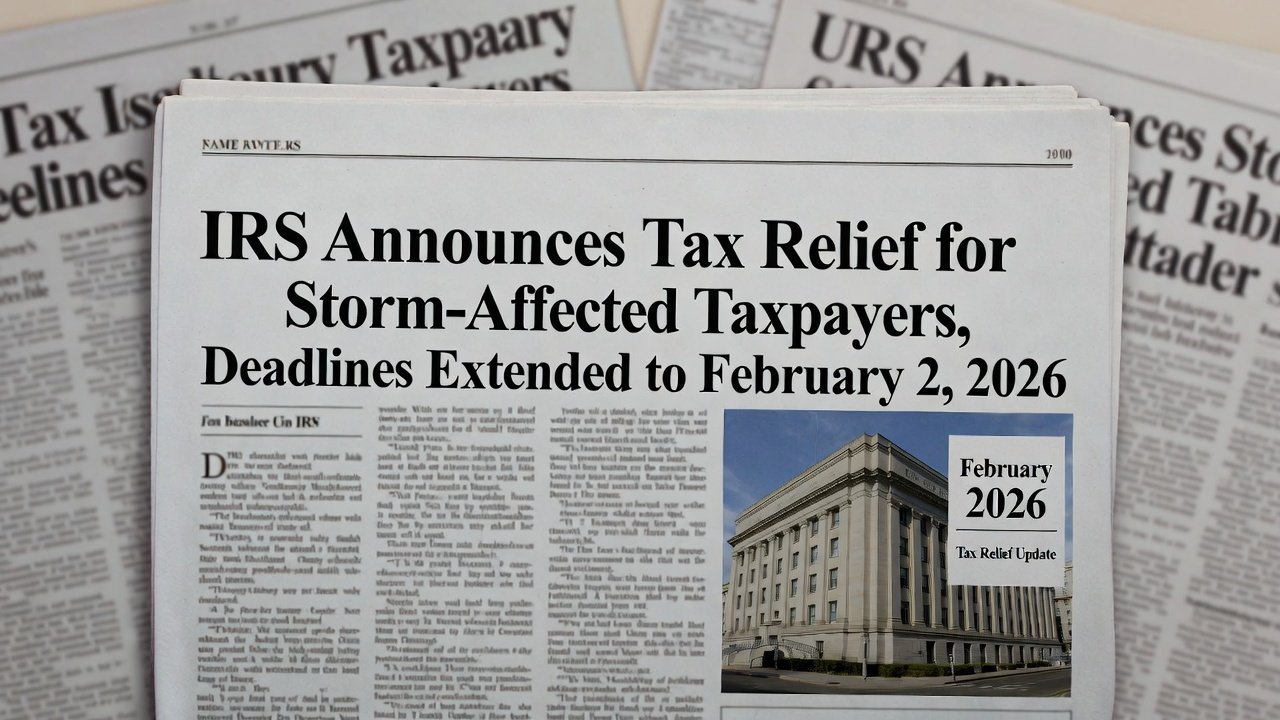
The Internal Revenue Service has announced major tax relief for individuals and businesses impacted by recent severe storms, granting automatic filing and payment extensions. This move provides much-needed breathing room for taxpayers struggling with disruptions caused by natural disasters, and it directly affects multiple IRS deadlines that were previously approaching.
Below is a clear explanation of who qualifies for this relief, which tax deadlines are extended, and what affected taxpayers need to know to stay compliant.
What the IRS Storm-Related Tax Relief Announcement Means
The IRS has officially extended several tax filing and payment deadlines to February 2, 2026 for taxpayers located in federally declared disaster areas. This relief is designed to reduce financial and administrative pressure on individuals and businesses recovering from storm-related damage.
The extension has been issued by the Internal Revenue Service and applies automatically to eligible taxpayers.
Who Qualifies for the February 2, 2026 Deadline Extension
Taxpayers whose primary residence or business address is located in a designated disaster area qualify for the extension. This includes individual taxpayers, self-employed workers, businesses, and certain nonprofit organizations. Relief may also apply to taxpayers who maintain records in affected areas, even if they live elsewhere.
Which Tax Deadlines Are Extended
The extension covers a wide range of IRS deadlines that originally fell during the disaster period. This includes individual income tax returns, business tax filings, quarterly estimated tax payments, and certain payroll and excise tax obligations. Penalties and interest related to these postponed deadlines are generally waived during the relief period.
How Automatic IRS Relief Works
Eligible taxpayers do not need to file additional paperwork to receive the extended deadlines. The IRS automatically identifies qualifying accounts based on address records. However, taxpayers who receive penalty notices despite eligibility can contact the IRS to have the penalties removed.
What Taxpayers Should Do During the Extension Period
Affected taxpayers are encouraged to use the extra time to gather documents, assess losses, and consult tax professionals if needed. Filing before the extended deadline is still allowed and may help speed up refunds or financial planning.
What If You Live Outside the Disaster Area
Taxpayers outside the designated disaster zones are not eligible for this specific extension. However, those indirectly affected, such as individuals whose tax records are stored in the impacted area, may still qualify by contacting the IRS.
Conclusion
The IRS storm-related tax relief extending deadlines to February 2, 2026 offers critical support to disaster-affected taxpayers. Understanding eligibility and covered deadlines ensures individuals and businesses can focus on recovery without the stress of immediate tax obligations.
Disclaimer: This article is for informational purposes only and does not replace official IRS guidance.