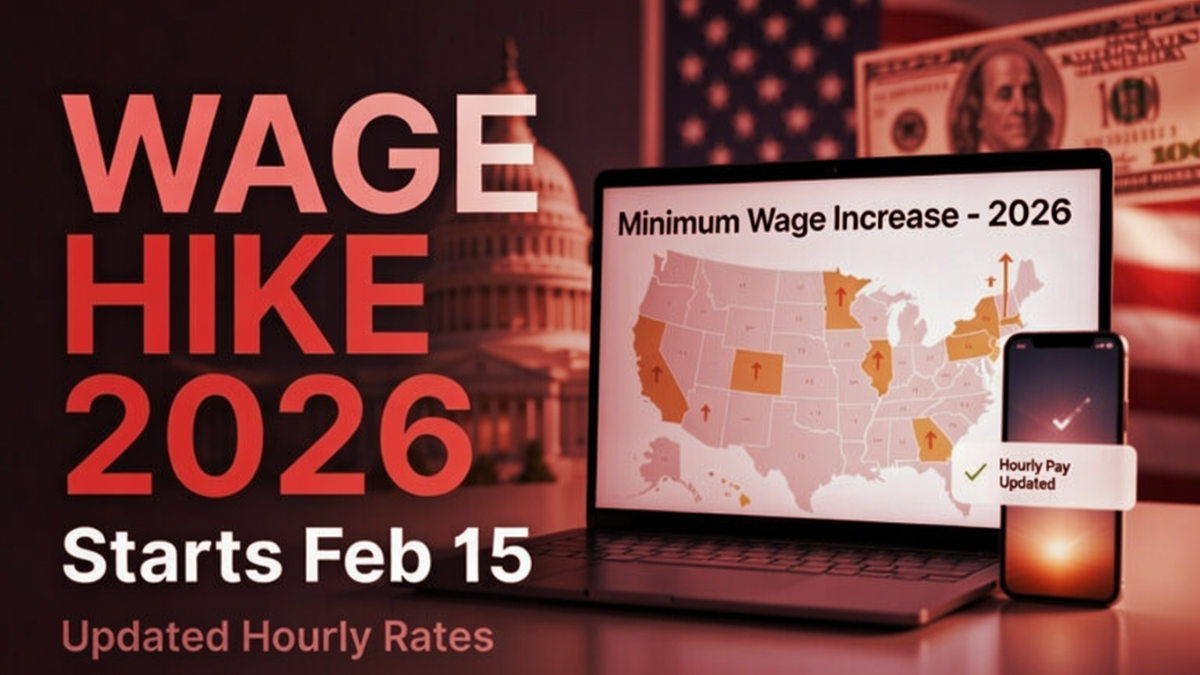
Workers across the United States are closely watching wage changes as new minimum wage increases begin rolling out in 2026. Starting February 15, updated hourly pay rates will apply in several states and cities, driven by inflation adjustments and new labor laws. While the federal minimum wage remains unchanged, millions of workers are set to earn more under state and local rules.
What the 2026 U.S. Minimum Wage Increase Is About
The 2026 minimum wage update reflects a mix of automatic cost of living adjustments and previously approved state legislation. These changes are not controlled by a single nationwide rule but are implemented at the state and city level, often tied to inflation benchmarks.
The federal minimum wage still stands at $7.25 per hour, but many states now mandate significantly higher pay, enforced under guidance from the U.S. Department of Labor.
New Hourly Pay Rates Starting February 15
From February 15, 2026, several states and local jurisdictions will begin enforcing higher hourly minimum wages. These increases apply to hourly workers, part time employees, and in many cases tipped workers, although tipped wage rules vary by state.
Exact hourly rates depend on where a worker is employed. Some high cost states and metropolitan areas now offer hourly minimum wages well above the federal level, reflecting local living expenses.
Which Workers Benefit From the 2026 Wage Update
The increase primarily benefits low wage earners in retail, food service, hospitality, healthcare support, and entry level roles. Part time workers and seasonal employees are also covered under most state minimum wage laws.
Independent contractors are generally excluded unless state law specifically reclassifies certain roles as employees.
Why February 15 Matters in 2026
February 15 has become a key enforcement date for several jurisdictions that align wage updates with early year inflation data rather than January 1. Employers are legally required to update payroll systems by this date to remain compliant.
Failure to comply can result in penalties, back pay requirements, and labor law violations.
How Employers Are Required to Comply
Employers must post updated wage notices, adjust payroll records, and ensure all eligible employees are paid at or above the new minimum rate. In states with multiple wage tiers, employers must also verify whether different rates apply based on company size or location.
Workers who believe they are being underpaid can file wage complaints through official labor departments.
Why the 2026 Minimum Wage Increase Matters
Rising housing costs, food prices, and healthcare expenses have intensified pressure on low income workers. The 2026 minimum wage increases aim to reduce wage gaps and help workers maintain basic purchasing power.
For many households, even a small hourly increase can translate into meaningful monthly income gains.
Conclusion
The U.S. minimum wage increase taking effect from February 15, 2026 marks an important shift for workers covered under state and local laws. While the federal rate remains unchanged, millions will see higher paychecks due to inflation linked adjustments and legislative action. Understanding local wage rules is essential for both workers and employers in 2026.
Disclaimer: This article is for informational purposes only and does not constitute legal or employment advice.