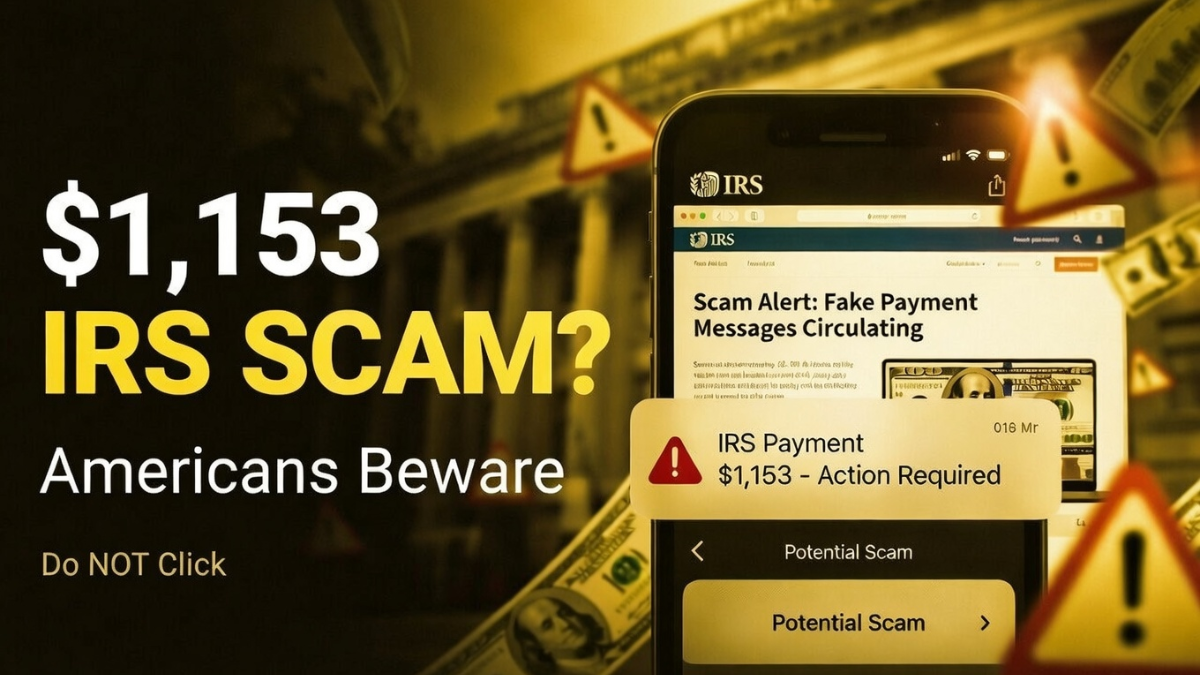
A new wave of online posts claiming a mysterious $1,153 payment is being issued by the IRS has triggered confusion and concern across the United States. Messages circulating on social media, text alerts, and emails suggest that Americans must act quickly to claim this money. Federal officials warn that these claims are not just misleading, they are actively being used to scam taxpayers.
Where the $1,153 Payment Rumor Came From
The $1,153 figure began appearing in viral posts that mix real tax terms with false promises. Some messages claim the amount is a special refund, a stimulus style payment, or a hidden benefit approved quietly for 2026.
In reality, no official program exists that authorizes a flat $1,153 payment to Americans. The number is often pulled from unrelated refund examples or fabricated entirely to appear believable.
What the IRS Has Actually Confirmed
The Internal Revenue Service has not announced any new payment, credit, or relief program issuing $1,153 checks or direct deposits. There is no application, deadline, or eligibility list tied to this amount.
Any legitimate IRS payment program is publicly announced through official government channels, not through forwarded messages or private alerts.
How Scammers Are Using the $1,153 Claim
Scammers are using the $1,153 rumor as bait to trick people into sharing sensitive information. Many messages urge recipients to click a link, confirm bank details, or pay a small processing fee to release the payment.
Once personal information is shared, it can be used for identity theft, fraudulent tax filings, or unauthorized bank withdrawals.
Why the Amount Sounds So Convincing
Scam amounts are often chosen carefully. A number like $1,153 feels specific enough to sound legitimate but small enough that people do not question it as much as a larger figure.
This tactic is designed to bypass skepticism and trigger quick action, especially among seniors and low income households.
Who Is Being Targeted the Most
Seniors, Social Security recipients, and people expecting tax refunds are the most common targets. Messages are often tailored to suggest eligibility based on age, income, or benefit status.
Receiving Social Security, SSI, SSDI, or having filed taxes does not automatically qualify anyone for a surprise payment.
Clear Signs a $1,153 Message Is a Scam
Any message claiming urgency, secrecy, or guaranteed payment is a red flag. The IRS does not threaten arrest, demand immediate action, or promise money without a filed return.
The IRS also does not contact taxpayers through social media, text messages, or unsolicited emails about payments.
What Americans Should Do If They Receive These Messages
Do not click links, respond, or share personal information. Delete the message immediately. If possible, report the scam to official consumer protection channels.
If you believe your information has already been compromised, monitor your financial accounts and consider placing fraud alerts.
Why These Scams Are Increasing in 2026
Rising costs and financial uncertainty make people more hopeful for unexpected relief. Scammers exploit this by recycling payment rumors with new dollar amounts each year.
Tax season and benefit payment periods provide perfect timing for these schemes to spread rapidly.
What Has Not Changed
There is no secret IRS payment, no hidden benefit, and no deadline to claim $1,153. Any real refund or credit comes only after filing a legitimate tax return and receiving official confirmation.
Staying informed is the strongest defense against these scams.
Conclusion
The $1,153 payment rumor is a scam driven by misinformation and fear. The IRS has issued no such payment, and Americans should treat any message claiming otherwise as fraudulent. Protecting your personal and financial information starts with knowing the facts and ignoring unverified payment claims.
Disclaimer: This article is for informational purposes only and does not constitute tax, legal, or financial advice.