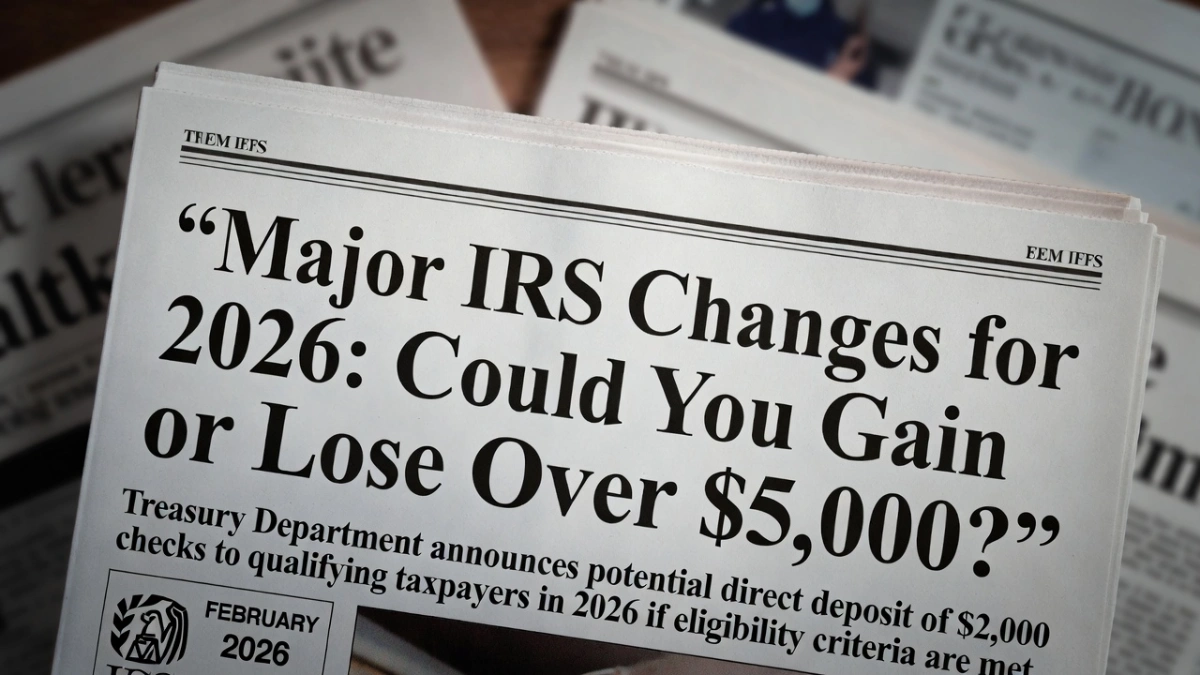
Major IRS Changes for 2026: The Internal Revenue Service has introduced updated tax thresholds, deduction limits, and credit adjustments for the 2026 tax year. These annual changes are largely tied to inflation adjustments, but depending on your income level and filing situation, the impact on your return could reach thousands of dollars.
Here’s what taxpayers need to understand.
Updated Tax Brackets for 2026
Federal income tax brackets are adjusted each year to reflect inflation. When brackets increase, some taxpayers may owe slightly less tax if their income remains steady. However, higher earners could still move into different brackets depending on salary growth.
Even small percentage changes can result in noticeable differences when applied across an entire year of income.
Higher Standard Deduction Limits
The standard deduction is expected to increase again for 2026. A higher deduction reduces taxable income, which may increase refunds or reduce the amount owed.
For families and married couples filing jointly, this adjustment alone can shift tax liability by several thousand dollars depending on income level.
Changes to Tax Credits
Certain tax credits may see adjustments in eligibility thresholds or maximum benefit amounts. Credits such as the Child Tax Credit, Earned Income Tax Credit, and retirement contribution credits often receive annual inflation updates.
For qualifying households, changes to credits can produce significant refund differences.
Retirement Contribution Limits
Contribution limits for 401k and IRA accounts are typically adjusted annually. Higher limits allow taxpayers to shelter more income from taxation, potentially reducing overall tax liability.
Maximizing contributions could make a multi-thousand-dollar difference over time.
Health Savings Account Adjustments
HSA contribution limits may increase in 2026, offering another way for eligible taxpayers to reduce taxable income while saving for medical expenses.
These adjustments are particularly valuable for families with high-deductible health plans.
Capital Gains and Income Threshold Updates
Capital gains tax thresholds may also rise. Investors could benefit from adjusted limits that affect long-term capital gains rates, especially those near income cutoffs.
Proper tax planning can help avoid unexpected liabilities.
Who Could See a $5,000+ Difference
Households experiencing income growth, changes in filing status, or new eligibility for credits could see large swings in tax outcomes. Business owners, high earners, and families claiming multiple credits are most likely to notice significant differences.
Careful planning before year-end can help reduce surprises.
What Taxpayers Should Do Now
Review withholding settings and update your W-4 if necessary. Consider increasing retirement contributions and evaluate eligibility for available credits. Staying informed about official IRS announcements ensures accurate filing.
Consulting a qualified tax professional can provide personalized guidance.
Conclusion: IRS updates for 2026 include adjustments to tax brackets, deductions, and contribution limits. While many changes are routine inflation adjustments, the financial impact could exceed $5,000 depending on your situation. Understanding how these updates affect your income, credits, and deductions is essential for effective tax planning.
Disclaimer: Tax outcomes vary based on individual income, deductions, and eligibility. This article provides general information only and should not be considered professional tax advice. Always consult official IRS resources or a certified tax professional for personalized guidance.