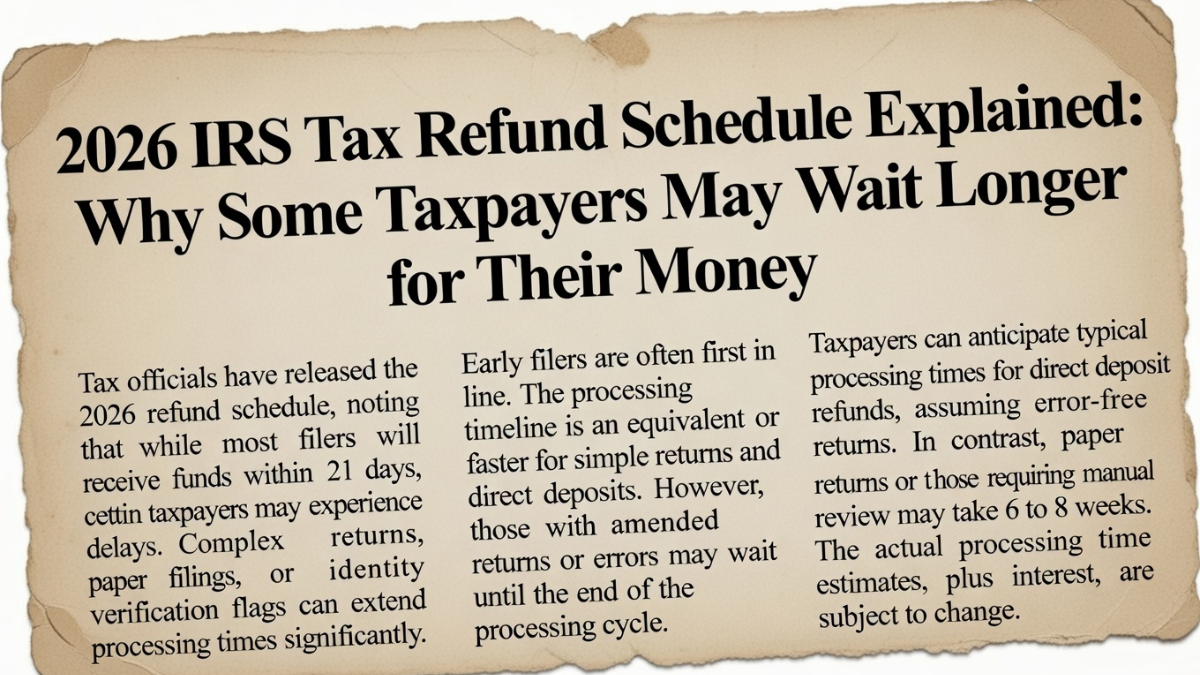
As the 2026 tax season begins, millions of Americans are preparing to file their returns and track their refunds. While many taxpayers expect their money within a few weeks, others may face unexpected delays. Understanding the IRS tax refund schedule for 2026 — and the reasons some refunds take longer — can help you avoid frustration and plan your finances more effectively.
Here’s a clear breakdown of how the refund timeline works and what could slow it down this year.
When Will the IRS Start Issuing Refunds in 2026?
The IRS typically begins accepting tax returns in late January. Once processing starts, electronically filed returns with direct deposit are usually handled within 21 days.
Taxpayers who file early and submit accurate returns often see refunds arrive in mid to late February. However, the exact deposit date depends on filing method, accuracy, and whether additional review is required.
Paper returns take significantly longer — often six to eight weeks or more — because they require manual processing.
Why Some Taxpayers Get Refunds Faster
Not all returns are processed at the same speed. Several factors can help accelerate your refund.
Electronic filing reduces processing errors and speeds up verification.
Choosing direct deposit eliminates mailing time.
Submitting complete and accurate information avoids additional review.
Filing early places your return ahead of peak-season volume.
If your return is straightforward — with no complex credits or identity issues — you are more likely to receive your refund within the standard 21-day window.
Common Reasons for Refund Delays in 2026
Even with electronic filing, certain conditions can extend processing times.
Returns claiming refundable credits such as the Earned Income Tax Credit or Child Tax Credit may be subject to additional fraud prevention checks. Federal law requires extra verification before issuing some refundable credits.
Errors or mismatched information, including incorrect Social Security numbers or income discrepancies, can trigger manual review.
Identity verification flags may delay processing if the IRS needs to confirm your identity.
Paper-filed returns move more slowly due to manual handling.
Outstanding federal debts or past-due obligations may reduce or delay your refund.
When a return is flagged for review, processing can extend beyond the typical three-week period.
How the 2026 IRS Refund Timeline Typically Works
The general processing timeline follows a predictable pattern.
Return received
Refund approved
Refund sent
Once the refund is approved, direct deposit typically arrives within a few days. Mailed checks may take additional time to reach your address.
If your refund status does not update after several weeks, it may indicate additional review or verification requirements.
How Tax Credits Affect Processing Time
Refundable tax credits are one of the biggest factors influencing refund timing.
The Earned Income Tax Credit and Child Tax Credit can significantly increase refund amounts. However, these credits also receive closer scrutiny due to fraud prevention measures.
Even if you file early, refunds including these credits may not be released immediately. The IRS may hold them temporarily while verifying eligibility.
While this process protects the system from fraudulent claims, it can extend wait times for legitimate filers.
Average Refund Amounts in 2026
Refund amounts vary based on income, withholding, and credit eligibility.
In recent years, average refunds have ranged between $2,500 and $3,500. Some families claiming refundable credits may receive larger amounts, while others may receive smaller refunds or owe taxes instead.
Your refund represents the difference between what you paid in taxes throughout the year and what you actually owed after calculations.
Higher refunds are not necessarily a bonus — they may indicate higher withholding during the year.
How to Track Your Refund Status
The IRS provides tools to check refund status shortly after filing.
Electronic filers can typically track updates within 24 hours of submission. Paper filers may need to wait several weeks before status updates appear.
Refund tracking generally shows whether the return has been received, approved, or sent.
Calling the IRS is usually unnecessary unless your refund exceeds the normal processing window.
Tips to Avoid Refund Delays
To minimize the chance of waiting longer than expected:
File electronically instead of mailing a paper return.
Select direct deposit instead of requesting a check.
Double-check all personal and income information.
Ensure tax credit eligibility is accurate and documented.
Respond promptly if the IRS requests additional verification.
Preparation and accuracy are key to faster processing.
What to Expect If Your Refund Is Delayed
If your refund takes longer than 21 days, it does not automatically mean there is a serious issue.
The IRS may be reviewing your return for accuracy.
There may be high processing volume during peak filing weeks.
Identity verification may be required.
In most cases, delayed refunds are eventually processed once review steps are completed.
Staying patient and monitoring official updates is the best course of action.
Conclusion
The 2026 IRS tax refund schedule is expected to follow a familiar pattern, with most electronic filers receiving refunds within about three weeks. However, taxpayers claiming refundable credits, filing paper returns, or encountering verification issues may experience longer wait times.
Understanding how the process works can help you set realistic expectations. Filing early, ensuring accuracy, and choosing direct deposit remain the most effective ways to speed up your refund.
Planning ahead and staying informed will help you navigate tax season with confidence.
Disclaimer: This article is for informational purposes only and does not constitute tax advice. For personalized guidance, consult a qualified tax professional or official IRS resources.